

Why Children’s Vision Needs More Than a Standard Eye Test
When parents think about their child’s vision, they usually think about eyesight.
Can they see the board at school? Can they read clearly? Do they need glasses?
These are important questions, but children’s vision is about more than just seeing clearly. It also involves how the eyes move, focus and work together, and how the brain processes what the eyes see.
Because of that, a standard eyesight test doesn’t always tell the full story about how comfortably a child is using their vision.
At Eyes by Design, Dr Nicholas Altuneg (Dr Nick) often explains to parents that children rely on their visual system for far more than distance clarity. Vision plays a major role in learning, reading, concentration and coordination, which can explain why some children struggle at school even when they appear to see clearly.

Vision and learning are closely connected
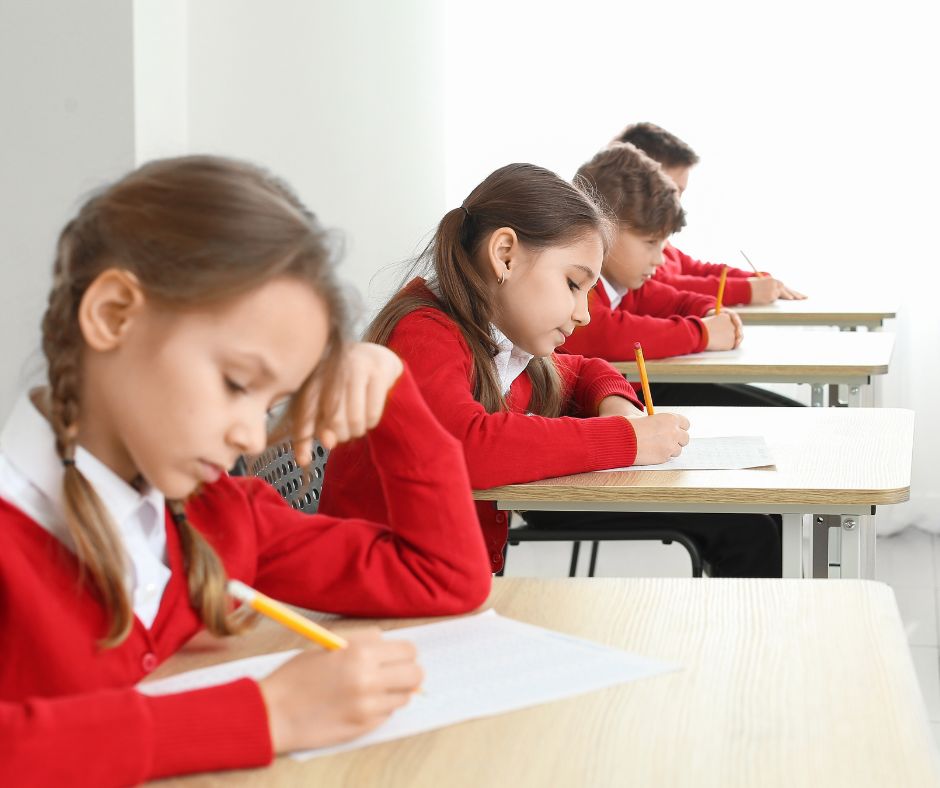
Children use their vision constantly throughout the school day.
Reading, writing, copying from the board, using tablets and participating in classroom activities all rely heavily on visual skills. Education researchers often estimate that a large share of classroom learning is visual.
For comfortable learning, several visual abilities need to work together. Children need to maintain clear focus when reading, track their eyes smoothly across a page, and coordinate both eyes so the brain receives a single, stable image. They also need to move their eyes efficiently between near tasks, such as reading, and distance tasks, such as the classroom board.
When these skills work well, reading and learning tend to feel natural. When they don’t, a child can still have clear eyesight but struggle with frustration, fatigue, or difficulty sustaining attention during visually demanding tasks.

Seeing clearly is not the same as using vision efficiently
A common misunderstanding is that if a child can read the letters on an eye chart, their vision must be good.
Distance clarity matters, but it doesn’t capture every aspect of visual function. Some children see clearly at a distance yet struggle with sustained near focus, accurate eye movements, or stable coordination between the eyes. These challenges don’t always present in ways that parents and teachers recognise as vision-related.
Dr Nick often reminds parents that vision isn’t just about whether a child can see something. It’s also about how comfortably and efficiently they use their eyes over time.
Signs that vision may be affecting learning
Children don’t always realise that their way of seeing is unusual. Instead of describing a vision problem, they tend to adapt their behaviour to the discomfort.
Parents and teachers sometimes notice patterns such as:
- avoiding reading or homework
- losing their place while reading
- using a finger to track words
- headaches after school
- short attention span during close work
- holding books very close
- skipping words or lines while reading
These behaviours can have many causes, but in some cases, they’re linked to visual skills that need closer attention.
The importance of comprehensive children’s eye examinations
Because children rely on their vision for learning and development, an eye examination often looks beyond distance vision alone.
A comprehensive children’s eye examination can include assessing focusing ability, eye coordination, tracking skills and visual processing, all of which shape how easily a child can sustain attention during reading or classroom tasks.
At Eyes by Design, the goal is to understand how a child’s visual system is functioning, not just whether they need glasses. That broader assessment helps determine whether vision might be contributing to learning difficulties or visual fatigue.
Why lens design and frame fit matter for children too
When children are prescribed glasses, comfort and stability matter even more than usual.
Children are active. They move constantly and switch quickly between reading, looking at the board, using screens, and playing, so their glasses need to hold up in a wide range of situations.
Children’s glasses deserve to be designed and fitted as carefully as adult eyewear; Dr Nick often tells parents. The lenses need to support the child’s visual needs, and the frame needs to keep them stable and comfortable throughout the day.
At Eyes by Design, that means paying attention not just to the prescription, but also to how the lenses are designed and how the chosen frame sits on the child’s face. Careful measurements and adjustments help the glasses stay comfortable and effective as the child learns, reads and explores their world. For many families, that attention to detail helps kids adapt more easily and feel more confident wearing their glasses.
Vision, Done Properly
At Eyes by Design, children’s vision care follows the same philosophy that runs through the whole practice: Vision, Done Properly.
That means looking beyond simple visual acuity and considering how the visual system functions in real-world situations such as reading, learning and play.
Dr Nick often works closely with families to understand how their child uses their vision and how personalised eye care, carefully chosen lenses, and well-fitted frames can support comfortable visual development.
Supporting confident vision as children grow
Children’s visual systems are still developing, and their visual demands change as they progress through school.
Regular eye examinations mean changes in vision or visual function can be detected early and treated appropriately.
For many families, understanding how vision affects learning is an important step towards helping their child feel more confident and comfortable in the classroom.
At Eyes by Design, Dr Nick and the team help children build strong visual foundations that support learning, coordination and everyday life.
FAQ
At what age should children have an eye examination?
Many children benefit from having their vision checked before starting school, or earlier if parents or teachers notice any concerns.
Can children have vision problems even if they can see clearly?
Yes. Some children have clear eyesight but have difficulty focusing, coordinating their eyes, or tracking, which can affect reading and learning.
Can glasses help with reading difficulties?
If a vision problem contributes to the difficulty, glasses or other visual support may improve comfort and efficiency when reading.
This article is intended to promote understanding of and knowledge about general eye health topics.
It should not be used as a substitute for professional advice, diagnosis or treatment.
Always seek the advice of your health care professional prior to incorporating this as part of your health regimen.

Dr Nicholas Altuneg
Since graduating in 1993, my greatest passion has been helping people of all ages live improved lives through better vision. At Eyes by Design, vision is so much more than being able to see clearly or read small letters from far away; it determines your perceptions and reactions every second of the day.
Read more about Dr Nick


Our Vision Services
Get In Touch
Contact us today


