
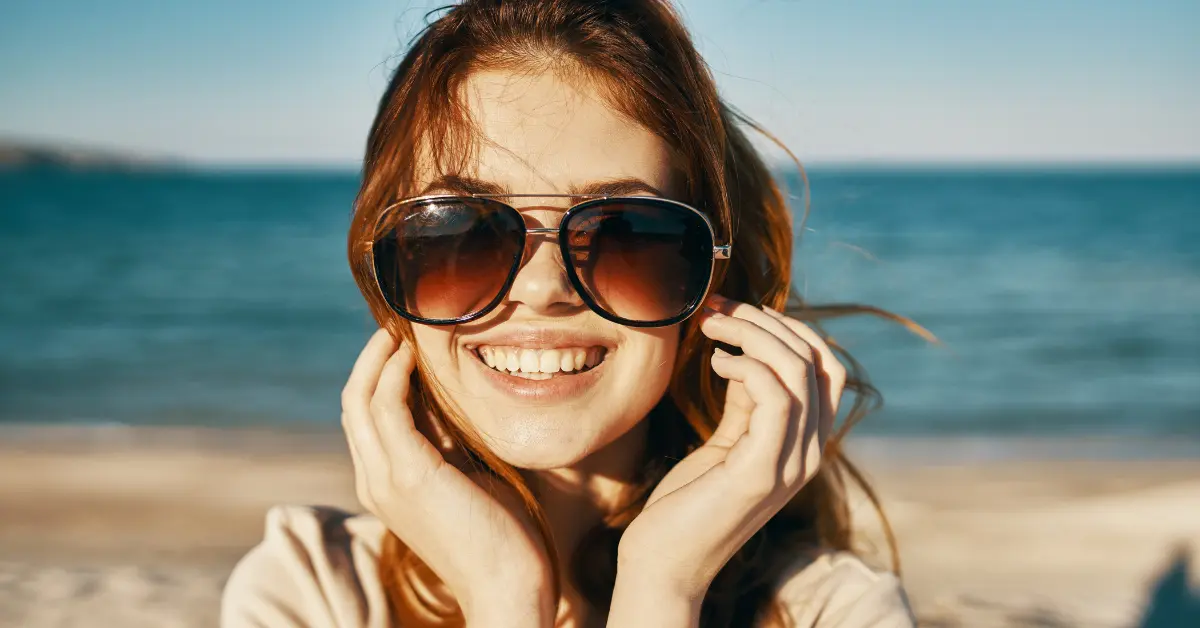
Are Sunglasses Enough? The Key To Effective Eye Protection In Summer
Updated 9 September 2026.
Are sunglasses enough? Not on their own. A pair of sunglasses only protects your eyes if the lenses meet the Australian standard, sit close to your face, and go on before the glare gets uncomfortable. Shade, a hat and a bit of timing cover what sunglasses cannot.
Sunlight is not the enemy here. The goal is not to hide from it. The goal is to stop the damaging part of it reaching your eyes, on the days when the UV is actually high, which is something you can check rather than guess.
The Short Answer
- Sunglasses are necessary, not sufficient: they protect your eyes directly, and they are meant to be worn alongside shade and a hat with a broad brim.
- The label matters more than the tint: look for AS/NZS 1067.2:2016. The colour of the lens does not tell you how much UV it blocks, and darker lenses do not always offer better protection.
- Fit is part of the protection: sunglasses that sit close to the face, or that wrap around, limit the UV reaching your eyes from the side.
- Children need the real thing: fashion or toy glasses do not provide an adequate level of protection for a child’s eyes.
- Check the UV, do not eyeball it: protection is needed once the UV index reaches 3, and the index can still be 3 or above on a cloudy day.
Every point above comes from Healthify. Both of our sources are listed at the end, and the detail is below.
What Too Much UV Actually Does To Your Eyes
Healthify, a New Zealand health information service, splits the effects of UV on the eyes into short term and long term. Both are worth knowing. The short term effects are the ones you feel, and the long term ones are the reason we ask about sun exposure when you come in for an eye examination.
Short Term Effects
Brief exposure to high levels of UV radiation can cause mild irritation, the feeling that there is something in your eye, photoconjunctivitis, which is inflammation of the conjunctiva, and photokeratitis, which is inflammation of the cornea and behaves like sunburn on the eye. These effects can show up at the time or come on later (Healthify).
Long Term Effects
Regular exposure to too much UV radiation is associated with an increased risk of cataracts and of pterygium, a white or creamy fleshy growth on the surface of the eye. It is also associated with cancer of the cornea or conjunctiva, basal cell carcinoma of the skin surrounding the eye, and wrinkling of that skin (Healthify).
We look for these changes during an eye examination. Where something needs care that sits outside optometry, we refer you to an ophthalmologist.
Why Reflected Light Off Water And Sand Matters
Reflection is the part that is easy to leave out of the sum. Snow reflects between 50 and 88% of UV radiation, sea surf, meaning the white foam, reflects 25 to 30%, and sand reflects about 15% (Healthify). Spend a Central Coast summer near the water and a real share of your UV exposure is arriving from below and from the side.
That is precisely the light a loose pair of sunglasses lets straight through.
When Do You Actually Need Eye Protection?
Once the UV index reaches 3, protection is required, and the index can still sit at 3 or above on a cloudy day (Healthify). That number is what to act on, rather than how bright the day looks to you.
You do not have to estimate it. ARPANSA runs a network of UV detectors in cities around Australia, updates the reading every minute, and shows what time the UV index will reach its daily maximum at each measurement site (ARPANSA).
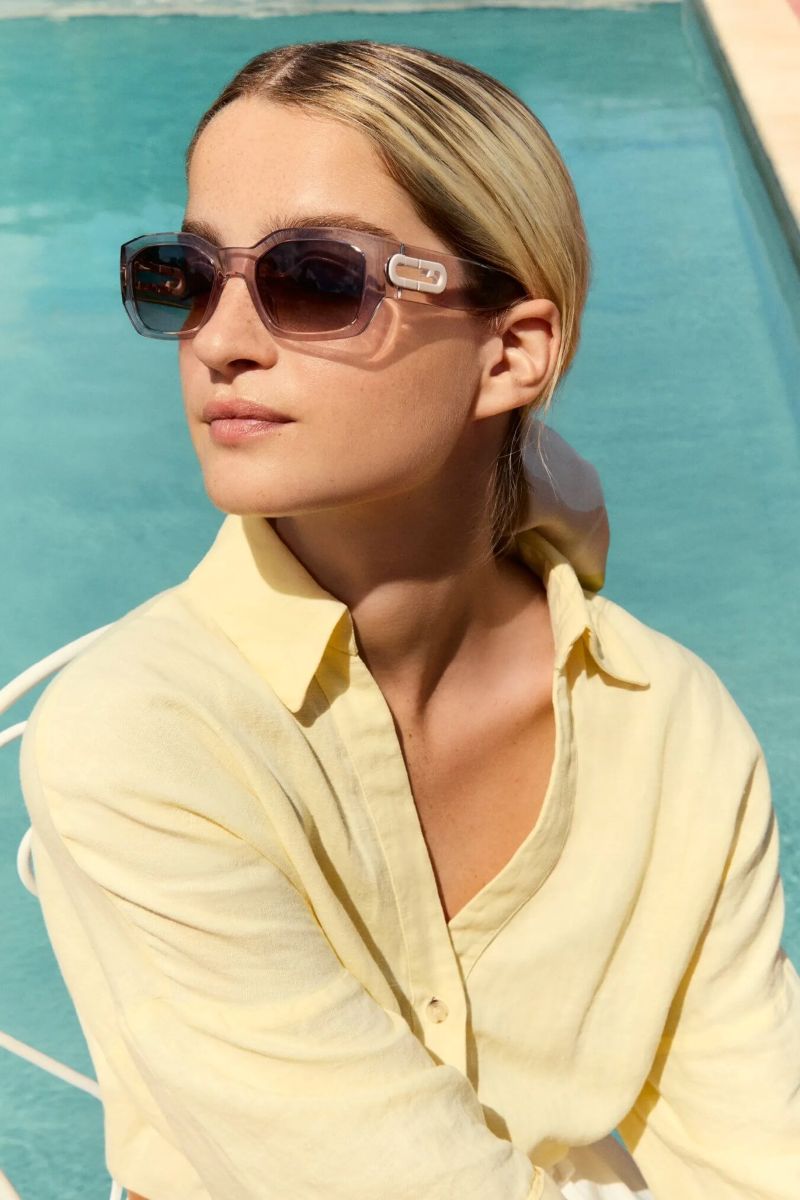
What Makes A Pair Of Sunglasses Genuinely Protective
Three things matter, and the first of them is printed on a label rather than visible on the frame.
- The standard: choose sunglasses that meet the Australian and New Zealand Standard for sunglasses and fashion spectacles, AS/NZS 1067.2:2016. Check the label, or ask the retailer. The standard is mandatory in Australia and voluntary in New Zealand (Healthify).
- Not the colour: the colour of the lens does not tell you how much UV it blocks, and darker lenses do not always offer better protection (Healthify). Choose a lens tint for comfort and contrast, then check the label separately for protection.
- The fit: they should be comfortable, they should not distort your vision, and they should sit close to the face or wrap around, which gives the most protection from UV entering at the sides (Healthify).
Do Cheap Sunglasses Protect Your Eyes?
Price is not the signal. The label is. A modestly priced pair carrying AS/NZS 1067.2:2016 is doing what the standard describes, and an unlabelled pair is an unknown whatever it cost you.
There is one category where the answer is already settled. Children’s fashion glasses and toy glasses should not be used to protect a child’s eyes from UV radiation, because they do not provide an adequate level of protection (Healthify).
Style and protection are separate questions, and the label settles the second one. If you are looking at this summer’s sunglasses trends, the standard on the label still applies.
What If You Already Wear Prescription Glasses?
You have four options (Healthify).
- UV treated lenses: have the lenses given a UV protection treatment when your glasses are made.
- Photochromic lenses: clear indoors, darkening in response to sunlight, so one pair covers both.
- Prescription sunglasses: a dedicated pair made to your prescription.
- Protective sunglasses worn over the top: sunglasses designed to fit over your existing glasses.
If you wear contact lenses, a standard pair of sunglasses without a prescription will do the job.
Children’s Eyes And The Same Standard
Sunglasses are made for children, and there are two things to check: that they meet the UV protection standard, and that they will stay on securely (Healthify). Fashion glasses and toy glasses do not clear that bar (Healthify).
Both checks matter. A pair that will not stay on a child’s face is not protecting that child, whatever the label says. Fit is something we can look at when you bring a child in for a children’s optometry appointment.
What Sunglasses Do Not Cover
Sunglasses handle the light coming at your eyes. A hat handles the light coming down onto them, and shade handles both.
Healthify suggests a hat with a brim of at least 7cm, made from fabric with an ultraviolet protection factor of 50 or above in a tight knit weave, and ideally light coloured on the outside with a darker colour under the brim to cut reflection. Staying inside while the sun is at its strongest covers the rest, and the ARPANSA chart will tell you when that is at your nearest measurement site.
When To Book An Eye Examination
If you notice a change in your vision, book an eye examination as soon as possible (Healthify). The same applies to eyes that stay red, gritty or sensitive to light after a long day outdoors, or a growth you can see on the white of the eye.
A comprehensive eye examination is also where we look for the long term changes listed above.
You can book an appointment online. We are in Kincumber and we see patients from across the Central Coast.
Frequently Asked Questions
Are Sunglasses Enough To Protect Your Eyes In Summer?
Not on their own. Sunglasses that meet AS/NZS 1067.2:2016 and sit close to the face protect your eyes directly, and they are meant to be used alongside shade and a hat with a brim of at least 7cm (Healthify).
Do Darker Lenses Block More UV?
No. The colour of the lens does not tell you how much UV it blocks, and darker lenses do not always offer better protection. Check the label for AS/NZS 1067.2:2016 instead (Healthify).
At What UV Level Do I Need Eye Protection?
From a UV index of 3 and above, including on cloudy days (Healthify). ARPANSA publishes live UV index readings for measurement sites around Australia and shows when the index will reach its daily maximum (ARPANSA).
Are Toy Sunglasses Good Enough For A Child?
No. Children’s fashion glasses and toy glasses should not be used to protect a child’s eyes from UV radiation, because they do not provide an adequate level of protection. Check that a child’s sunglasses meet the UV protection standard and stay on securely (Healthify).
Can I Wear Sunglasses Over Prescription Glasses?
Yes. Protective sunglasses made to fit over prescription glasses are one of four options, along with a UV protection treatment on your lenses, photochromic lenses, and prescription sunglasses (Healthify).
Sources
- Australian Radiation Protection and Nuclear Safety Agency, Ultraviolet Radiation Index. Retrieved 9 September 2026.
- Healthify, Eye Protection In The Sun. Retrieved 9 September 2026.
By Dr Nick Altuneg
This article is intended to promote understanding of and knowledge about general eye health topics.
It should not be used as a substitute for professional advice, diagnosis or treatment.
Always seek the advice of your health care professional prior to incorporating this as part of your health regimen.

Dr Nicholas Altuneg
For over two decades, my greatest passion has been helping people of all ages live improved lives through better vision. At Eyes by Design, vision is so much more than being able to see clearly or read small letters from far away; it determines your perceptions and reactions every second of the day.
Read more about Dr Nick


Our Vision Services
Get In Touch
Contact us today


