

How Often Should You Get an Eye Test? Advice by Age and Risk From Eyes By Design in Kincumber
How Often Should You Get An Eye Test?
Most people should have an eye test every 2 or 3 years, according to healthdirect’s guide to eye tests. You may need a test more often if you have diabetes, high blood pressure or a family history of eye disease, and you should book one sooner if your vision changes.
It is easy to put an eye test off when your glasses still seem fine. The trouble is that some eye conditions develop slowly and without symptoms, and a regular eye test can find them before you notice anything. This guide sets out how often adults, children and people with particular risk factors should have their eyes tested, and what happens during an eye examination at Eyes By Design in Kincumber.
Key takeaways:
- Most adults: an eye test every 2 or 3 years, as healthdirect advises.
- Diabetes: repeat eye tests every 1 to 2 years, as healthdirect advises.
- Glaucoma in the family: Glaucoma Australia recommends an eye check every 2 years from age 40.
- Children: a full eye examination before starting school, then every 2 to 3 years through school, as Optometry Australia recommends.
How Often Should Adults Get an Eye Test?
healthdirect advises that people aged 40 and over should have an eye test every 2 to 3 years, and more regularly if they have risk factors such as diabetes, a family history of eye disease or high blood pressure. It also lists being over 65 as a reason to organise an eye test, along with any symptoms in your eyes or changes to your vision.
Those intervals are a starting point. When we examine your eyes, we look at your prescription, your eye health and your history, and then we recommend when your next eye test should be. If we see something we want to keep an eye on, we may ask you to come back sooner than the general guideline. Our adult eye examinations page explains how we approach eye tests for adults at each stage of life.
Why Do You Need an Eye Test If Your Vision Seems Fine?
Regular eye tests can pick up problems before you notice anything, healthdirect explains, including glaucoma, cataracts and macular degeneration. The earlier these conditions are found, the sooner treatment can begin. An eye test also tells you whether glasses or contact lenses would help you see more clearly at different distances.
Glaucoma Australia describes glaucoma as developing slowly and often without any symptoms, so many people do not know they have it until the disease is advanced. You can read more about the condition on our glaucoma page and our guide to common eye conditions.
When Should You Book an Eye Test Sooner?
You don’t need to wait for your next scheduled eye test if something changes. healthdirect advises organising an eye test if you notice symptoms with your eyes or changes to your vision. Symptoms worth booking an eye test for include:
- Blurry vision: print, road signs or the television look less clear than they used to.
- Headaches: headaches that come on after reading or screen work. Our article on blurry vision and headaches looks at this in more detail.
- Tired, itchy or watery eyes: eyes that feel strained by the end of the working day.
- Reading trouble: rereading the same sentence, losing your place or reading more slowly than before.
- Close work: holding your phone or a menu further away to read it, which our page on age related focusing changes explains.
If you know that an eye condition runs in your family, mention it when you book so the optometrist can take it into account during your eye test.

How Often Should You Get Your Eyes Checked If You Have Diabetes?
People with diabetes should have repeat eye tests every 1 to 2 years, according to healthdirect’s page on diabetic retinopathy. For type 1 diabetes, healthdirect advises a first eye test 2 to 5 years after diagnosis. For type 2 diabetes, it advises an eye check when the diabetes is first diagnosed.
healthdirect also advises seeing an optometrist or your doctor as soon as you can if your vision changes. Our article on diabetes and eye health explains how diabetes can affect the eyes.
How Often Should You Get an Eye Test If Glaucoma Runs in Your Family?
Glaucoma Australia recommends that all Australians aged 50 or older visit an optometrist every 2 years for a comprehensive eye examination. If you have a family history of glaucoma, or you are of Asian or African descent, it recommends an eye check every 2 years from the age of 40.
Glaucoma Australia also states that you are 10 times more likely to have glaucoma if a direct family member has it. Knowing your family history matters, so ask your relatives if you’re unsure and tell us what you find out.
How Often Should Children Have an Eye Test?
Optometry Australia recommends that all children have a full eye examination with an optometrist before starting school, then regularly, every two to three years, through primary and secondary school. Its Good Vision for Life guide to children’s vision also notes that about one in five Australian children has an undetected vision problem.
Children often assume that the way they see is normal, so they may not tell you anything is wrong. Our children’s eye examinations page explains what we check at a child’s eye test. If your child is short sighted, our page on myopia explains how we help manage it.
What Happens During an Eye Test at Eyes By Design?
healthdirect explains that during an eye test, the optometrist will ask about your general health and family medical history and then run tests to check your eyes. Not everyone needs every test. Depending on your health and risks, an eye test may include:
- Visual acuity: reading letters, numbers or shapes on a chart to check how well you see detail at different distances.
- Refraction: looking through different lenses so the optometrist can work out the prescription you need.
- Eye pressure: a quick puff of air that measures the pressure inside your eye, since high pressure can suggest glaucoma.
- The back of the eye: a check of your retina, blood vessels and optic nerve. If drops are used to widen your pupils, your sight may be blurry for a few hours afterwards.
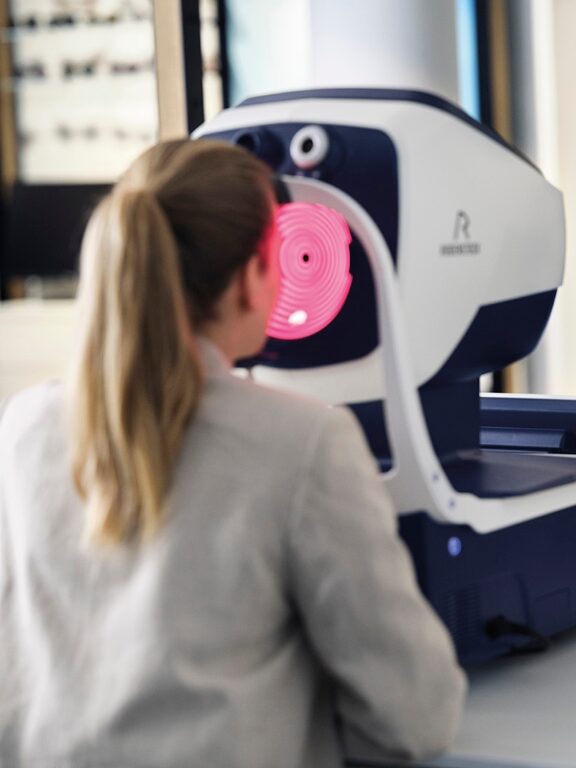
At Eyes By Design, we take images of your eyes at each appointment so we can compare them over time and see any changes. We allow a longer consultation, and we explain what we are checking as we go. Once the eye test is finished, we go through the results with you and explain your options. If you need care from an ophthalmologist, we refer you. You can read more about our approach on our Vision Done Properly page.
Common Questions About Eye Tests
Can You Have More Than One Eye Test a Year?
Yes. If your vision changes or you notice symptoms with your eyes, healthdirect advises organising an eye test rather than waiting. The Medicare rebate follows its own schedule: healthdirect states that when an optometrist bulk bills, Medicare pays for one eye test every 3 years if you are under 65 and one eye test every year if you are over 65. Our optometrist’s fee page explains how our fees and Medicare rebates work.
Do You Need a Referral for an Eye Test?
No. healthdirect confirms that you don’t need a doctor’s referral to see an optometrist for an eye test. You can book directly with us.
Does Medicare Cover Glasses?
No. healthdirect notes that Medicare doesn’t cover the cost of glasses or contact lenses. If you have private health insurance, you may be able to claim for them, depending on your insurer and your level of cover.
Book Your Next Eye Test in Kincumber
If it has been more than 2 years since your last eye test, or your vision has changed, it is a good time to book. Eyes By Design is in Kincumber on the Central Coast, and you can book an eye test appointment online.
This article is intended to promote understanding of and knowledge about general eye health topics.
It should not be used as a substitute for professional advice, diagnosis or treatment.
Always seek the advice of your health care professional prior to incorporating this as part of your health regimen.

Dr Nicholas Altuneg
Since graduating in 1993, my greatest passion has been helping people of all ages live improved lives through better vision. At Eyes by Design, vision is so much more than being able to see clearly or read small letters from far away; it determines your perceptions and reactions every second of the day.
Read more about Dr Nick
What Others Are Reading:


Our Vision Services
Get In Touch
Contact us today


