

“Why do I need more than one pair of glasses?” It’s a question I hear surprisingly often, and I completely understand it. A patient sits down and tells me they want one pair that does everything, drive in them, work on the computer, read, watch TV, shop, play golf and wear out to dinner. On the surface that sounds perfectly reasonable. You only have one pair of eyes, so surely one pair of glasses should be enough?
Short answer: sometimes one pair works beautifully, but asking a single pair to do everything almost always means compromising comfort, clarity or performance somewhere. The real question isn’t “what can you see?” It’s “what do you need to do?” Matching the lens to the task is what makes the difference.

The Shoe Analogy I Use With Patients
The easiest way I explain it is to compare glasses to shoes. Most people don’t own one pair that does everything, you might have walking shoes, work shoes, runners, boots and something nicer for dinner. Could you wear runners to a wedding? Probably. Would they be the best choice? Probably not. It simply isn’t possible to make one pair of shoes meet every need, and it’s the same for your eyes.
How you use your eyes in daily life matters far more than how many letters you can read on the chart. Do you spend the day on a computer? Drive long distances? Struggle with glare? Read for long stretches? Sew, paint, garden, fish or play golf? Use one screen, two or three? Each answer points to a different ideal solution.

Driving Needs Its Own Solution
Driving places very specific demands on your vision, clear distance, good awareness of what’s around you, quick sign-reading, and accurate judgement of distance and movement. You also deal with constantly changing light: bright sun, road glare, reflections, rain and night driving. Polarised sunglasses cut reflected glare from roads and other surfaces and can make a real difference to comfort outdoors. A pair that’s perfect for reading or office work may not be the right tool behind the wheel, something we cover in poor night vision when driving.
Computer Work Has Become Its Own Category
One of the biggest changes over my career is how much time people now spend on screens, often six, eight or ten hours a day. Screens sit in the “intermediate” zone, not as far as a road sign but not as close as a book, which can be awkward for people with presbyopia or those in multifocals. General-purpose multifocals are excellent for everyday use but don’t give the widest, most comfortable field for extended screen work, so people end up lifting their chin, leaning in or constantly adjusting their posture, and over time that contributes to headaches, eye strain and neck and shoulder tension. This is where occupational lenses (sometimes called office or extended-reader lenses) come in, designed specifically for computer and desk work.

Reading And Close Work Need Precision
Reading asks the eyes to focus precisely, hold that focus, track smoothly and process fine detail for long periods, even more so for medicine labels, ingredient lists, craft, sewing or bookkeeping. Simple reading glasses suit some of these tasks well if you only need help at one distance, but if you’re constantly moving between reading, the computer and looking across the room, single-vision readers get frustrating because they only work within a limited range. It’s also worth understanding the age-related focusing change driving all of this.
Multifocals Are Excellent, But Not Magic
Multifocals are one of the most useful options available, they let you see at multiple distances through one pair, which is wonderfully convenient. But even a very good multifocal is a carefully designed compromise: the design can be optimised toward distance, intermediate or near, but not perfectly for all three at once. I sometimes describe them as a Swiss Army knife, brilliant for many jobs, but if you were building a house you’d still want a proper toolbox. You can read more on our multifocal glasses page.
A Real Example: When Three Pairs Made Sense
I had a patient who came in wanting one pair to do everything. Once we looked closely at their lifestyle, it was clear one pair wouldn’t give them the best outcome. For general use I prescribed photochromic multifocals, clear distance, intermediate and near, with a tint that changes in different light. For driving and outdoors in high glare they needed polarised multifocal sunglasses, which mattered because bright, reflective conditions were contributing to migraines. And for their side-by-side multi-screen workstation, occupational lenses gave a wider, more comfortable field than their everyday multifocals could.
The result wasn’t just clearer vision, it was less squinting, fewer headaches, less fatigue and better productivity. That’s the real point: the goal was never “more glasses,” it was matching the solution to the task.
The Hidden Cost Of The Wrong Glasses
Using the wrong glasses for a task doesn’t always mean blurry vision, sometimes it just means everything takes more effort. You might still read the screen but feel wiped out by the end of the day. You might get through your work but notice headaches, poorer concentration or neck and shoulder discomfort. Many people adapt without realising, leaning in, tilting the head, squinting, shuffling in the chair, and the body is very good at compensating. But compensation has a cost, and over a full week that extra effort adds up.
“Am I Being Sold More Glasses?”
I understand why some people feel cautious when an optometrist suggests more than one pair, nobody wants to feel sold to. It helps to look at it differently. If a carpenter owns more than one tool, nobody assumes they’ve been oversold. If a golfer owns more than one club, or a chef more than one knife, we understand each is designed for a different job. Different glasses aren’t about having more for its own sake, they’re about the right tool for the job. Sometimes one pair is plenty; sometimes two or three solutions give a far better result. The number isn’t the point. The outcome is.
Modern Lens Technology Has Changed What’s Possible
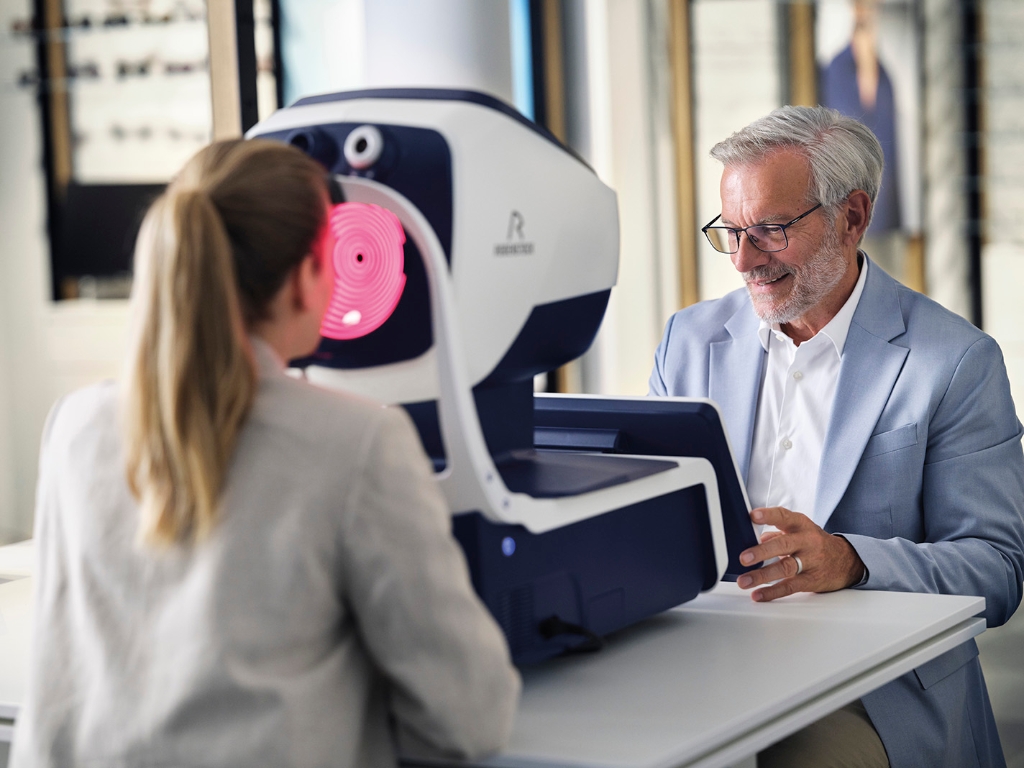
One reason we get such good results today is that lens technology has improved dramatically. At Eyes by Design we use the Rodenstock DNEye Scanner and ImpressionIST technology to take detailed measurements of your eyes and how your glasses sit in front of them, so lenses can be designed around you. I compare it to a tailored suit versus something off the rack, especially helpful for more advanced designs like multifocals and occupational lenses. You can see how it works on our biometric lenses page.
Frequently Asked Questions
Why isn’t one pair of glasses enough?
Because different tasks place different demands on your eyes. A pair optimised for reading isn’t ideal for driving, and a general multifocal isn’t the most comfortable choice for hours of screen work. Sometimes one pair works well; often two or three task-specific solutions give a noticeably better result.
Do I need separate glasses for the computer?
Not always, but many people benefit from occupational (office) lenses for extended screen work. They give a wider, more comfortable intermediate-to-near field than a general multifocal, which reduces the chin-lifting and leaning that lead to headaches and neck strain.
Are multifocals good for driving?
Multifocals work for everyday driving, but for long distances or high-glare conditions many people are far more comfortable in dedicated polarised sunglasses. Glare and changing light place specific demands on your vision that a single all-purpose lens may not handle as well.
Am I being upsold if I’m recommended more than one pair?
No, it’s about the right tool for the job, the same way a tradesperson owns more than one tool. Sometimes one pair is genuinely enough. The aim is always the best outcome for how you actually use your eyes, not the number of pairs.
Glasses That Keep Up With Your Life
At the end of the day this isn’t really about glasses, it’s about quality of life: working comfortably, enjoying your hobbies, driving confidently, reading easily and having energy left for the people who matter. If your current glasses aren’t keeping up with your lifestyle, it’s worth a proper conversation about what your eyes actually need to do each day. If you’re on the Central Coast, come and see us at Eyes by Design in Kincumber. Book an appointment or call (02) 4369 8169.
This article is intended to promote understanding of and knowledge about general eye health topics.
It should not be used as a substitute for professional advice, diagnosis or treatment.
Always seek the advice of your health care professional prior to incorporating this as part of your health regimen.

Dr Nicholas Altuneg
For over two decades, my greatest passion has been helping people of all ages live improved lives through better vision. At Eyes by Design, vision is so much more than being able to see clearly or read small letters from far away; it determines your perceptions and reactions every second of the day.
Read more about Dr Nick



Our Vision Services
Get In Touch
Contact us today


