

Could Too Much Screen Time Be Affecting Your Vision?
Screens are a big part of everyday life now, at work and at home. There is growing evidence that a lot of time on a computer screen or a phone can take a toll on your health, and your eyes in particular. With so much of work and daily life now happening on a screen, most of us are not going to avoid them entirely, so the sensible goal is to use them in a way that looks after your eyes.
One study found that Australians spend, on average, around 5.5 hours a day on their phones, which adds up to roughly 17 years over a lifetime. It is a sobering figure when you see it laid out like that, and that is before you count screen time at work or the television at night. Before we look at how to manage your screen time in a healthier way, it helps to understand what all those hours can do to your eyes.

Screen Time and Blurry Vision
Long stretches of screen use are a common cause of blurry vision. When you concentrate on a screen for a long time, the tiny focusing muscles inside your eye hold one position and can tire or even briefly lock up, in much the same way any muscle stiffens after holding a single pose for too long.
When that happens, your eyes can struggle to switch focus quickly from the screen to something in the distance, and the view stays blurry for a moment while they catch up. Over time, and if it is left unchecked, this kind of strain can play a part in longer term changes such as myopia or astigmatism, which may mean you need glasses to see clearly. The good news is that these changes can be assessed and managed once we know they are there.
Screen Time and Dry, Irritated Eyes
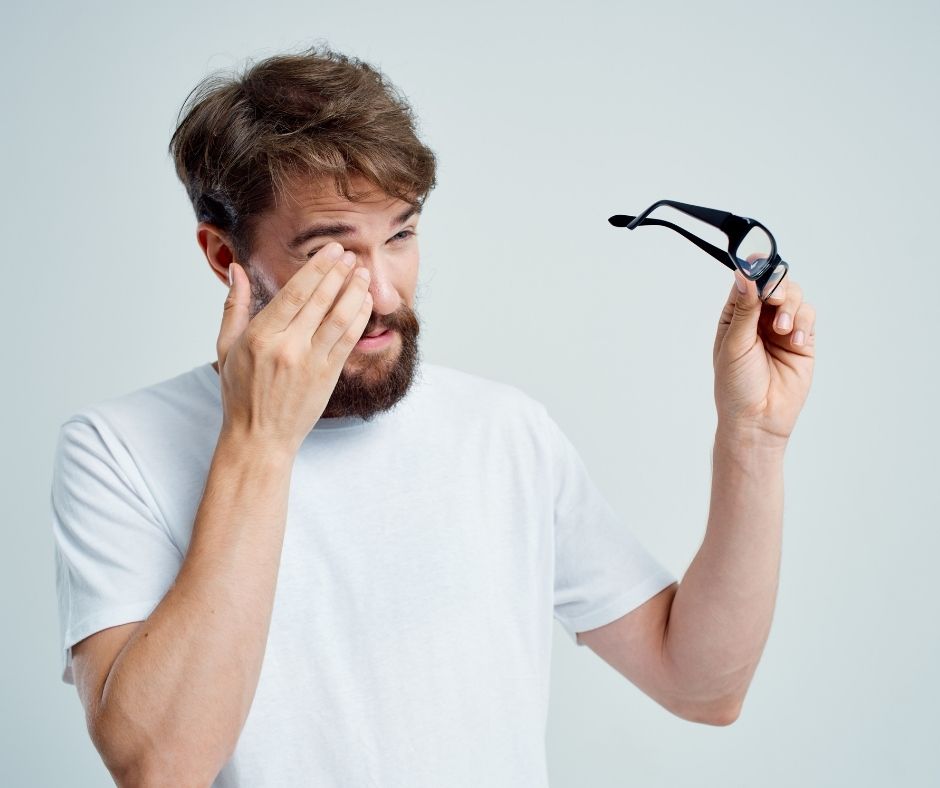
Eyes can become dry and irritated during screen time, thanks to the concentration involved and the brightness of the display. You might notice yourself squinting, rubbing your eyes or blinking hard, which are all natural reactions to eyes that feel sore and tired.
Squinting reduces the amount of light reaching your eyes, but it also cuts your blink rate by two to four times. Blinking less slows the rate at which the protective oily layer on the surface of your eye is topped up, so your tears evaporate more quickly and your eyes start to feel dry. Dry, tired eyes then limit how long you can comfortably focus on a screen in one sitting. Rubbing your eyes too hard over time can also thin the cornea, which in some people is linked to corneal astigmatism or keratoconus, so it is worth being gentle and having any ongoing dryness looked at.
Screen Time and Short-Sightedness (Myopia)
Rates of myopia, or short-sightedness, have climbed steadily over recent decades, and research projects that around half the world’s population could be short-sighted by 2050. Myopia blurs distance vision and is corrected with glasses or contact lenses. A lot of close focus, whether on a screen or a book, along with less time spent outdoors, is thought to be one of the factors behind the rise, especially in children.
When the eyes settle into one fixed focus on a screen for long periods, the visual system adapts to that near work, and over time this can contribute to the eye lengthening, which is the change that underlies myopia. For children in particular, there are myopia management options designed to help slow how quickly short-sightedness progresses. If that is a concern for your family, it is well worth a conversation, and plenty of time outdoors remains one of the simplest, most useful habits you can encourage.

Screen Time and Your Sleep
Sleep does not sit directly under eye health, but it shapes your general wellbeing, so it is worth a mention here. Screens of all kinds, from phones to televisions to tablets, give off blue light, and blue light in the evening can nudge your body clock by slowing the production of melatonin, the hormone that helps you wind down and sleep.
Interestingly, how much light scatters inside the eye depends partly on how clearly you see the screen, so the right prescription genuinely helps. The correct focus matters, and the right lens coating can make a real difference too. Certain coatings reduce glare and reflection, and can help with the blue light coming off your devices. The single most useful habit, though, is simply to ease off the screens in the hour or so before bed, because the closer you get to sleep, the more melatonin production is affected.
Practical Ways to Manage Your Screen Time
If you work in an office role, a computer or laptop is almost certainly part of the job, so cutting screen time to zero is not realistic. A few small habits, though, can take a lot of the load off your eyes. A good one to start with is the 20-20-20 rule: every twenty minutes, look at something around twenty feet, or six metres, away for about twenty seconds. It gives your focusing muscles a regular break and takes no effort to build into the day.
Beyond work hours, these habits help reduce the total:
- Turn off notifications: every alert is an invitation to pick up your phone, so switching non-essential notifications off means you reach for the screen far less often.
- Keep the bedroom screen free: it is easy to fall into scrolling last thing at night and first thing in the morning. If you rely on your phone as an alarm, charge it in another room and use an old fashioned alarm clock instead.
- Set a limit outside work: if hours disappear into social media or television, swap some of that time for a physical activity, ideally outdoors, which is good for your eyes and the rest of you.
How We Can Help at Eyes By Design
If any of the symptoms above sound familiar, a sensible first step is to book an eye examination. The earlier we can look at what is going on, the sooner we can help you manage it and slow any further changes. During a comprehensive test we can check for signs of computer vision syndrome, talk through anti-fatigue lens options and coatings suited to screen work, and, for children, discuss myopia management where it is appropriate.
As your local Kincumber optometrists, our aim is to support your eye health for the long run, screens and all. You can book online here.
Frequently Asked Questions
Can Screen Time Permanently Damage My Eyes?
For most people, the tired, dry and blurry feeling that comes with heavy screen use is temporary and eases with breaks and good habits. That said, ongoing strain can play a part in longer term changes, so if your symptoms persist it is worth having your eyes checked rather than waiting it out.
What Is the 20-20-20 Rule?
The 20-20-20 rule is a simple way to give your eyes regular breaks from close screen work. Every twenty minutes, look at something around twenty feet, or six metres, away for about twenty seconds. It lets your focusing muscles relax and is an easy habit to build into a busy day.
Do Blue Light Lens Coatings Help?
Lens coatings can reduce glare and reflection and help with the blue light given off by screens, which some people find more comfortable, especially in the evening. The most reliable way to protect your sleep, though, is still to limit screen use in the hour before bed. We are happy to talk through whether a particular coating suits how you use your devices.
This article is intended to promote understanding of and knowledge about general eye health topics.
It should not be used as a substitute for professional advice, diagnosis or treatment.
Always seek the advice of your health care professional prior to incorporating this as part of your health regimen.

Dr Nicholas Altuneg
Since graduating in 1993, my greatest passion has been helping people of all ages live improved lives through better vision. At Eyes by Design, vision is so much more than being able to see clearly or read small letters from far away; it determines your perceptions and reactions every second of the day.
Read more about Dr Nick


Our Vision Services
Get In Touch
Contact us today


