
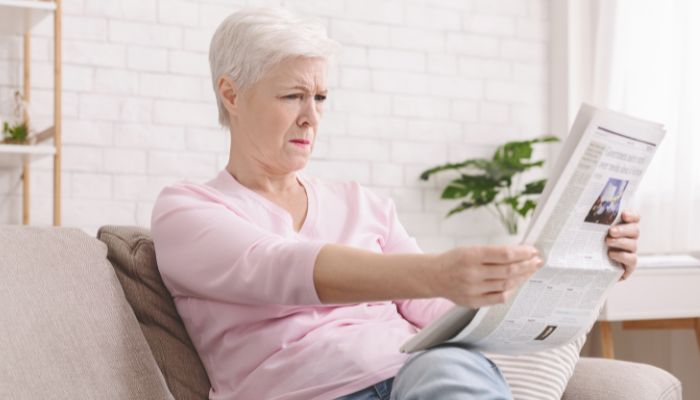
“My arms aren’t long enough anymore.”
I hear that line all the time. It usually comes from someone in their 40s or 50s who’s quietly frustrated with their near vision. The phone is harder to read. The print on medicine bottles looks smaller than it used to. Menus need brighter light. They find themselves holding things further away, squinting, or shuffling the distance back and forth until the words finally settle.
Hardly anyone walks into my consulting room in Kincumber and says “I think I have presbyopia.” Far more often it’s “I think my eyes are getting worse,” “Am I going blind?” or “Have I spent too much time on screens?”
Short answer: yes, optometrists treat presbyopia, it’s one of the most common things we help with. Presbyopia is the normal, age-related loss of close-up focus that affects nearly everyone from around 40. It isn’t a disease and it isn’t a sign of going blind. The real question isn’t whether we can help, but which solution best fits the way you actually use your eyes.

What Is Presbyopia?
Presbyopia is the gradual loss of your eye’s ability to focus on things up close, usually first noticed between the ages of 40 and 45. When we’re younger, the natural lens inside the eye is flexible and changes shape easily to switch focus between distance and near. As we get older, that lens stiffens and can no longer adjust the way it once did. It’s a normal part of ageing, you can read more about it on our age-related focusing page.
That’s why close work starts to feel harder. Reading small print, checking your phone, scanning labels, working on a computer or reading in dim light all become more of an effort than they used to be.
The First Signs Of Presbyopia
In my experience presbyopia rarely arrives all at once, it sneaks up. First you hold the phone a bit further away. Then you need more light to read. Soon supermarket labels, medicine packets and dim restaurant menus get genuinely difficult.
Common signs include:
- Trouble reading your phone or fine print
- Needing brighter light to read comfortably
- Holding reading material further away
- Eye strain or headaches after close work
- Tired eyes by the end of the day
For a lot of people these changes happen so slowly they adapt without realising, bumping up the font size, avoiding low light, joking that their arms have shrunk. Those little workarounds hold for a while, but eventually the effort gets hard to ignore.
The Biggest Misconception About Presbyopia
One of the biggest worries I see is people assuming presbyopia means they’re going blind, that their eyes are failing, or that years of reading and screen use have caused it. I spend a lot of time reassuring people that this isn’t the case. Presbyopia affects virtually everyone who lives long enough. It’s a normal age-related change.
Yes, it usually keeps progressing gradually, and your prescription may need adjusting over the following 15 to 20 years. But that doesn’t mean you’re heading toward blindness, it simply means your eyes need a hand focusing up close. And wearing glasses or contact lenses won’t weaken your eyes or make them “lazy.” They help you see comfortably without causing any harm.
What Are The Treatment Options?
Because everyone uses their eyes differently, I don’t believe there’s one perfect fix for everybody. The best option depends on what you need your eyes to do.
Reading Glasses
Often the simplest solution. They work well at one set near distance, a book, the phone, a crossword. The trade-off is a fairly narrow range, so you’ll find yourself putting them on and taking them off through the day. Some people are happy with that; others find it impractical.
Multifocal Glasses
Multifocals are among the most popular options because they let you see at distance, intermediate (like a computer) and near through the one pair, far less swapping. Like any lens they involve some compromise, with areas of softer focus in the periphery that take a little adaptation. Modern designs are dramatically better than when I started practising nearly 30 years ago, and the vast majority of suitable patients adapt very successfully when the lens, measurements and prescription are matched carefully to the person. We go deeper into this on our multifocal glasses page.
Occupational Lenses
One of my favourite solutions for office workers. These are designed for indoor tasks, computer work, reading, desk-based jobs, with wider reading and intermediate zones than a standard multifocal. For people on multiple screens or wide monitors it can be a genuine relief: less fatigue, better posture, more comfort across the day. It often goes hand in hand with managing computer vision syndrome.
Contact Lenses
Many people are surprised that contact lenses still work well once presbyopia develops. There are multifocal contact lenses, the option of distance contacts plus reading glasses, or monovision, one eye corrected mainly for distance, the other for near. Some people love monovision; others feel unbalanced by it. That’s exactly why finding the right solution is an individual process.

One Pair Of Glasses Doesn’t Always Solve Everything
A common belief is that one pair of glasses should handle every visual task. In reality that’s rarely the case. I compare it to shoes, most of us don’t own one pair for work, walking, running and dinner. Our eyes have different demands in different situations too.
I recently worked with a patient who needed three solutions: a photochromic multifocal for everyday use, polarised multifocal sunglasses for high glare (glare was triggering migraines), and occupational lenses for their multi-screen workstation. The result wasn’t just clearer vision, it was less fatigue, fewer headaches and better productivity. The goal was never “more glasses,” it was helping them function better.
Why I’m Wary Of Self-Prescribed Chemist Readers
Plenty of people notice their reading slipping and grab ready-made readers from the pharmacy. They suit some people, but they rarely offer an ideal result. Most of us have differences between our two eyes, and many people have astigmatism or focusing and coordination issues that off-the-shelf readers simply don’t address. They also use standard measurements that may not line up with where your eyes sit in the frame.
The upshot is ongoing headaches, eye strain and reduced reading endurance, symptoms people often assume are “normal.” They’re frequently just a sign of a solution that isn’t matched to the eyes. Readers also don’t replace a proper eye examination, which can pick up eye disease and other issues before they become a problem.
Sometimes It Isn’t Just Presbyopia
Another reason I encourage people not to self-diagnose: presbyopia isn’t always the whole story. People come in sure they only need readers, and during testing we sometimes find focusing difficulties, eye-teaming or binocular vision problems, dry eye, or other age-related conditions contributing as well. A comprehensive eye examination helps us understand not just what you’re struggling with, but why.

Why Personalised Lens Technology Matters
At Eyes by Design we use the Rodenstock DNEye Scanner and ImpressionIST technology to capture highly detailed measurements of your eyes and how your glasses sit in front of them, thousands of data points that let us build a personalised lens design. I compare it to a tailored suit rather than something off the rack: both might work, but one is made for you. It’s the technology I choose to wear myself, and you can see how it works on our biometric lenses page.
Frequently Asked Questions
Can optometrists treat presbyopia?
Yes. Helping people manage presbyopia is one of the most common things optometrists do. We assess how you use your eyes and match a solution, reading glasses, multifocals, occupational lenses or contact lenses, to your lifestyle, rather than assuming one option suits everyone.
At what age does presbyopia usually start?
Most people first notice it between 40 and 45, though it can be a little earlier or later. It tends to progress gradually over the following 15 to 20 years, so your prescription may need adjusting along the way.
Will wearing reading glasses make my eyes weaker?
No. Glasses and contact lenses help your eyes focus comfortably, they don’t weaken your eyes or make them dependent. Presbyopia progresses with age whether or not you wear glasses; the glasses simply make near tasks easier in the meantime.
Are chemist reading glasses good enough?
They help some people for occasional, single-distance tasks, but they use standard measurements and don’t account for differences between your eyes, astigmatism or focusing issues. Many people end up with avoidable strain and headaches. A proper examination and prescription usually gives a far more comfortable result.
Does presbyopia mean I’m going blind?
No. Presbyopia is a normal age-related change in the eye’s focusing lens, not a disease and not a path to blindness. It simply means your eyes need help focusing up close.
Noticing The Signs On The Central Coast?
If you’ve recognised yourself in this article, don’t bury your head in the sand and hope it passes. The earlier we identify and address the change, the sooner you’re back to reading easily and working comfortably, and a thorough exam also lets us check your overall eye health. If you’re on the Central Coast, we’d love to help you at Eyes by Design in Kincumber. Book an appointment or call (02) 4369 8169.
This article is intended to promote understanding of and knowledge about general eye health topics.
It should not be used as a substitute for professional advice, diagnosis or treatment.
Always seek the advice of your health care professional prior to incorporating this as part of your health regimen.

Dr Nicholas Altuneg
Since graduating in 1993, my greatest passion has been helping people of all ages live improved lives through better vision. At Eyes by Design, vision is so much more than being able to see clearly or read small letters from far away; it determines your perceptions and reactions every second of the day.
Read more about Dr Nick

Our Vision Services
Get In Touch
Contact us today


