

Do You Need a Referral to See a Behavioural Optometrist? Everything You Need to Know
When it comes to eye care, many people wonder, “Do you need a referral to see a behavioural optometrist?”.
You may also ask “when should I see a behavioural optometrist?”; “How do I choose the right practitioner?” and “What should I expect during my visit?”.
Whether you’re experiencing vision-related issues or simply curious about optimising your visual performance, understanding the path to behavioural optometry care is crucial.
Let’s explore this topic in-depth and clarify any misconceptions.

The Short Answer: Referral Requirements
To directly address the main question: In most cases, you DO NOT need a referral to see a behavioural optometrist.
Behavioural optometrists are primary eye care providers, which means you can typically schedule an appointment directly without needing to see another healthcare professional first.
However, there are a few scenarios where a referral might be beneficial or necessary:
Integrated care approach: If you’re already receiving treatment for related issues (e.g., learning disabilities, neurological conditions), your current healthcare provider might refer you to a behavioural optometrist as part of a comprehensive treatment plan.
Complex cases: In some instances, if you have a complex medical history or sustained an a traumatic medical event that has affected your vision, your general optometrist, ophthalmologist or allied health care practitioner might refer you to a behavioural optometrist for specialised care.
While these scenarios exist, they are not the norm. Most people can freely choose to consult a behavioural optometrist without any formal referral.
At Eyes by Design, we welcome both direct appointments and referrals, ensuring that anyone who needs our specialised care can easily access it.
When to Consider Seeing a Behavioural Optometrist
Understanding when to seek the expertise of a behavioural optometrist is crucial. While you don’t typically need a referral, recognising the signs that you might benefit from behavioural optometry services is important. Consider scheduling an appointment if you or your child experience:
- Persistent reading difficulties: Struggling with reading speed, comprehension, or losing place frequently while reading.
- Eye strain or headaches: Especially when performing close-up tasks like reading or computer work.
- Poor sports performance: Difficulty judging distances or tracking moving objects.
- Attention and concentration issues: Trouble maintaining focus on visual tasks or easily distracted.
- Coordination problems: Challenges with hand-eye coordination or general clumsiness.
- Visual discomfort after screen time: Experiencing fatigue, blurred vision, or discomfort after using digital devices.
- Learning difficulties: Struggling in school despite normal intelligence and effort.
- History of head injury or concussion: Visual symptoms persisting after a head trauma.
- Diagnosed with dyslexia or ADHD: These conditions can sometimes be associated with visual processing issues.
- Symptoms persist despite normal eye exams: If standard optometry hasn’t resolved your visual concerns.
- Career-specific visual demands: Professions requiring exceptional visual skills (e.g., pilots, athletes, surgeons).
- Developmental concerns: For children who might be falling behind in visual-motor skills.
Remember, you don’t need to wait for a referral to address these concerns.
If you recognise any of these signs, you can directly contact a behavioural optometrist like myself at Eyes by Design for a comprehensive eye assessment.
The Importance of Self-Advocacy in Eye Care
While referrals aren’t typically necessary for behavioural optometry, the concept of self-advocacy in eye care is crucial. As a patient, you have the right and responsibility to seek the care that best addresses your needs. Here’s why self-advocacy matters:
- Personalised care: You know your symptoms and concerns best. By directly seeking specialised care, you ensure your specific needs are addressed.
- Timely intervention: Waiting for a referral can delay treatment. Self-advocacy allows for quicker access to necessary care.
- Comprehensive approach: Behavioural optometrists offer a holistic view of vision care that a standard eye exam might not offer.
- Empowerment: Taking charge of your eye health decisions can lead to better overall healthcare engagement.
- Awareness: By researching and choosing a behavioural optometrist, you become more informed about your visual health options.
- Preventive care: Don’t wait for vision problems to become severe. Proactive visits to a behavioural optometrist can catch issues early.
At Eyes by Design, we encourage patients to be proactive about their vision health. If you feel that behavioural optometry might benefit you, don’t hesitate to reach out directly. We’re here to support your journey to optimal visual health and performance.

Choosing the Right Behavioural Optometrist
Since you typically don’t need a referral, selecting the right behavioural optometrist becomes your responsibility. Here are some factors to consider:
- Credentials: Ensure the optometrist has specific training and certification in behavioural optometry.
- Experience: Look for a practitioner with a proven track record in treating your specific concerns.
- Technology: Choose a practice that uses up-to-date technology for assessments and treatments.
- Approach: Find an optometrist whose philosophy aligns with your healthcare beliefs and goals.
- Communication style: Select a practitioner who explains things clearly and listens to your concerns.
- Location and accessibility: Consider the convenience of the practice’s location and office hours.
- Patient reviews: Read testimonials or ask for references from current patients.
- Medicare, Health Insurance and Costs: Understand what services are covered by Medicare and your health insurance and what out-of-pocket expenses you might incur.
- Specialisations: Some behavioural optometrists focus on specific areas like pediatrics or sports vision.
- Collaborative care: If you have other health concerns, choose an optometrist who is willing to work with your other healthcare providers.
At Eyes by Design, we strive to meet all these criteria, offering experienced care, advanced technology, and a patient-centred approach. We encourage potential patients to ask questions and ensure they feel comfortable before scheduling an appointment.
What to Expect During Your First Visit
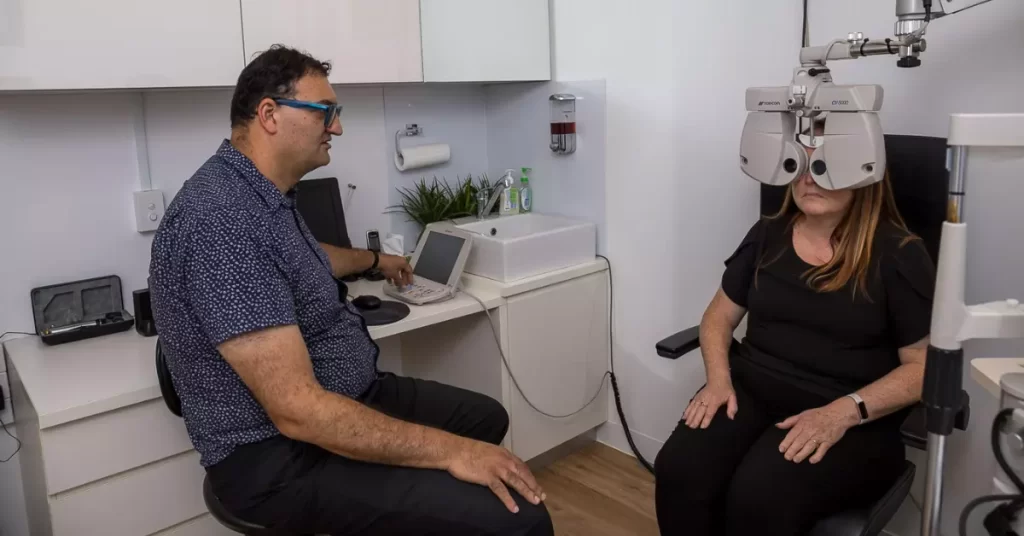
Knowing what to expect can ease any anxiety about seeing a behavioural optometrist for the first time. Here’s a typical process at Eyes by Design:
- Comprehensive history: We’ll discuss your visual concerns, general health, and lifestyle factors that might impact your vision.
- Standard eye exam: This includes visual acuity tests, refraction assessment, and eye health evaluation.
- Specialised testing: We’ll assess various aspects of visual function, including eye teaming, tracking, and focusing abilities.
- Functional vision evaluation: This may involve tests that simulate real-world visual tasks.
- Visual processing assessment: We’ll examine how your brain interprets visual information.
- Discussion of findings: We’ll explain our observations and how they relate to your symptoms or concerns.
- Treatment recommendations: Based on our findings, we’ll propose a customised treatment plan.
- Questions and answers: We encourage you to ask questions and express any concerns about the findings or recommendations.
- Next steps: We’ll outline the proposed treatment process and schedule follow-up appointments if necessary.
Remember, this process is about more than just your eye health; it’s about optimising your overall visual performance and quality of life. Come prepared with questions and be ready to actively participate in your care.
The Role of Behavioural Optometry in Overall Health
Behavioural optometry plays a crucial role in overall health and well-being:
- Cognitive function: Good vision is vital for learning and information processing.
- Physical health: Vision problems can lead to poor posture and physical strain.
- Mental health: Visual difficulties can contribute to anxiety and decreased self-esteem.
- Productivity: Optimal visual function is essential for work and academic performance.
- Quality of life: Clear, comfortable vision enhances enjoyment of daily activities.
- Safety: Good vision and visual processing are crucial for activities like driving.
- Social interaction: Visual cues are important in non-verbal communication.
- Preventive care: Early intervention can prevent the progression of vision problems.
By addressing visual function comprehensively, behavioural optometrists contribute to overall health and well-being. This holistic approach underscores the importance of seeking specialised care when needed, regardless of whether a referral is required.
Summary
In conclusion, while you typically don’t need a referral to see a behavioural optometrist, understanding when and how to access this specialised care is crucial.
At Eyes by Design, we’re committed to providing accessible, comprehensive vision care that goes beyond standard eye exams.
Whether you’re experiencing specific visual challenges or simply want to optimise your visual performance, don’t let the lack of a referral hold you back.
Take charge of your visual health by reaching out directly to a qualified behavioural optometrist.
Remember, your vision impacts every aspect of your life. By choosing behavioural optometry, you’re investing in your overall well-being and quality of life.
We encourage you to listen to your body, recognize the signs that you might benefit from specialised care, and take proactive steps towards optimal visual health.
If you have any questions or would like to schedule a regular eye exam, don’t hesitate to contact us at Eyes by Design. Your journey to better vision starts here.
This article is intended to promote understanding of and knowledge about general eye health topics.
It should not be used as a substitute for professional advice, diagnosis or treatment.
Always seek the advice of your health care professional prior to incorporating this as part of your health regimen.

Dr Nicholas Altuneg
Since graduating in 1993, my greatest passion has been helping people of all ages live improved lives through better vision. At Eyes by Design, vision is so much more than being able to see clearly or read small letters from far away; it determines your perceptions and reactions every second of the day.
Read more about Dr Nick
What Others Are Reading:


Our Vision Services
Get In Touch
Contact us today


