

When most people choose new glasses, the frame is the first thing they notice.
It’s what they see in the mirror. It shapes how the glasses feel and how they fit with personal style, so frame choice naturally feels like the fashion part of the process.
Style does matter. Glasses should feel like you.
But frames do far more than shape appearance.
How a frame fits on the face determines where the lenses sit in front of the eyes, and improper alignment can cause distortion or eye strain. A well-fitting frame lets the lenses perform as intended and reduces discomfort and visual distortion throughout the day. A poorly fitted, unstable, or unsuitable frame can cause those exact problems, affecting both comfort and clarity.
At Eyes by Design, Dr Nicholas Altuneg (Dr Nick) often points out that glasses work best when lenses and frames are considered together. The frame isn’t just there to hold the lenses; it plays a real role in how well they perform in everyday life.
Glasses are not two separate decisions
It’s common to think of glasses as two separate parts, the lenses and the frame.
They work as a system. The lenses provide the prescription and optical design. The frame determines where those lenses sit relative to the eyes. Get that positioning right, and the glasses feel natural and comfortable. Get it wrong, and even a good prescription in a well-designed lens might not feel right.
That’s why choosing frames is about more than finding a style that suits your face. The frame must also properly support the vision solution.
Why lens position matters
Lenses work best when they’re correctly positioned in front of the eyes.
That position depends on how far the frame sits from the face, the angle of the lenses, where the frame rests on the nose, and how evenly it sits from side to side. In optics, even small variations matter.
If a frame sits too far from the eyes, slides down the nose, or tilts unexpectedly, it can affect how the lenses perform and how comfortable the glasses feel.
Patients don’t need to understand every technical measurement to notice the effect, Dr Nick often says. What matters is that the glasses feel balanced, clear and comfortable to wear.

Stability matters as much as fit
A stable frame supports consistent vision, which matters most for people who wear their glasses all day.
Glasses that slide, shift or sit unevenly change the relationship between the lenses and the eyes throughout the day. Even small movements can affect how consistently the optics are presented to the wearer, and that matters even more for anyone using more advanced lens designs, where positioning counts for a lot.
At Eyes by Design, careful frame adjustment is part of ensuring glasses not only look good when you collect them but also feel secure and supportive in daily life.
Why frame shape and size also matter
The shape and size of a frame can affect how well certain lenses perform.
Some lenses require specific frame dimensions or shapes to deliver smooth visual transitions or stable optics across the lens. If a frame is too small, too large, too shallow, or not well suited to the intended lens design, the result won’t be as comfortable as it could be.
That’s why frame choice shouldn’t rest on appearance alone. At Eyes by Design, Dr Nick and the team consider not only whether a frame suits you aesthetically but also whether it will support the lens design and remain stable on your face over time.
Precision helps frames and lenses work together
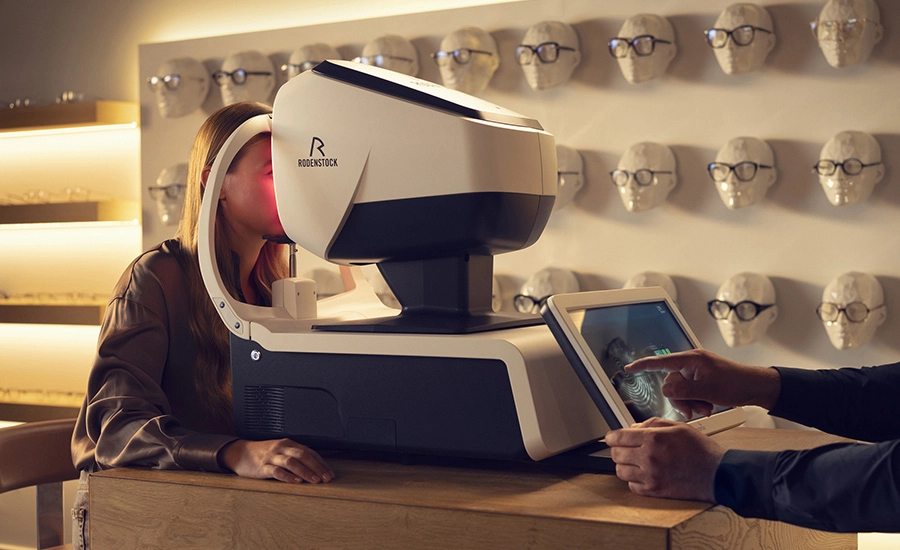
Advanced measurement systems can now capture detailed information about how a chosen frame sits on the face, including position-of-wear and centration details that determine where the lenses should sit within the frame.
At Eyes by Design, this is part of a more precise, considered approach to eyewear. Technology such as the ImpressionIST tower helps capture these measurements more accurately, so the final lenses can be positioned to reflect how the glasses will be worn.
For patients, none of this needs to feel technical. The practical benefit is simply that your glasses are designed and fitted with greater attention to detail.
Why this matters more with modern lenses
As lens technology advances, frame fit becomes increasingly important.
More personalised lens designs can offer better optical performance, but that performance still depends on the lenses being correctly positioned in front of the eyes. If the frame doesn’t support that positioning, some of the benefit of the lens design is lost.
That’s why the best outcomes come from considering the lenses, the frame, and the measurements used to fit them together, which is very much the idea behind Vision, Done Properly.

Vision, Done Properly
At Eyes by Design, we don’t approach eyewear as simply choosing a frame and inserting lenses.
Good glasses function as a complete system. The eyes, the prescription, the lens design, the frame, and the final fit all shape how vision feels in the real world.
That’s what underpins Vision, Done Properly, a more intentional approach in which personalised eye care, precision lenses, and thoughtfully chosen frames work together to support clear, comfortable vision.
Supporting confident vision for life
For many people, glasses are worn most of the day. They need to work while reading, on screens, at work, while driving, and in all the small moments in between.
When a frame fits properly and supports the lenses as intended, glasses are far more likely to feel stable, comfortable and reliable.
If your glasses slide down your nose, sit unevenly, or never quite feel as comfortable as they should, frame fit may well be part of the reason.
At Eyes by Design, Dr Nick and the team take care to help patients choose frames that suit their style and visual needs, supporting confident vision for life.
FAQ
Does frame fit really affect vision?
Yes. How a frame positions the lenses in front of your eyes affects how the optics perform and how comfortable your glasses feel throughout the day.
Why do my glasses keep sliding down my nose?
This usually comes down to frame shape, bridge fit, adjustment, or overall size not quite matching your face.
Can changing the frame improve comfort even with the same prescription?
In some cases, yes. A frame that positions the lenses more effectively and remains stable can genuinely improve comfort.
What does the ImpressionIST tower measure?
It captures detailed measurements of how your chosen frame sits on your face, including centration and position-of-wear data to help position lenses more accurately.
This article is intended to promote understanding of and knowledge about general eye health topics.
It should not be used as a substitute for professional advice, diagnosis or treatment.
Always seek the advice of your health care professional prior to incorporating this as part of your health regimen.

Dr Nicholas Altuneg
Since graduating in 1993, my greatest passion has been helping people of all ages live improved lives through better vision. At Eyes by Design, vision is so much more than being able to see clearly or read small letters from far away; it determines your perceptions and reactions every second of the day.
Read more about Dr Nick


Our Vision Services
Get In Touch
Contact us today


