
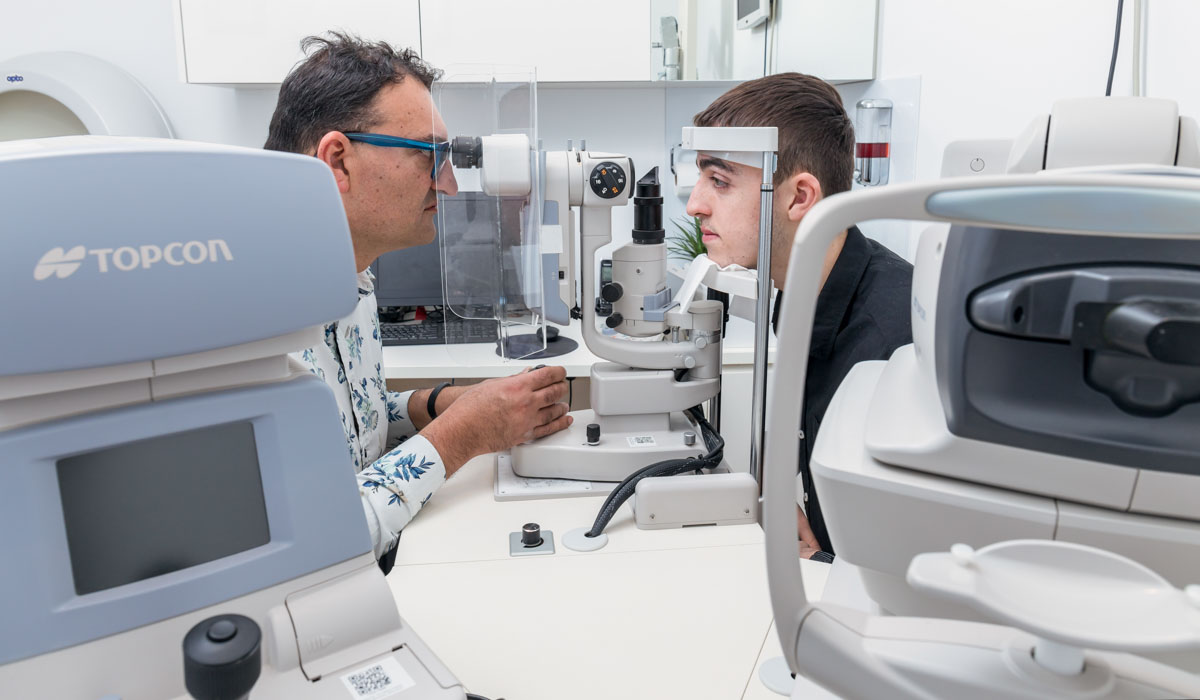
If your child has never had a comprehensive eye test before, you may not know what to expect.
Many parents picture a quick appointment: read some letters on a chart, shine a light in the eyes, and leave with either “glasses” or “no glasses.” That may be enough for a basic eyesight check, but it does not tell the whole story of how a child uses vision for reading, writing, learning, and concentrating.
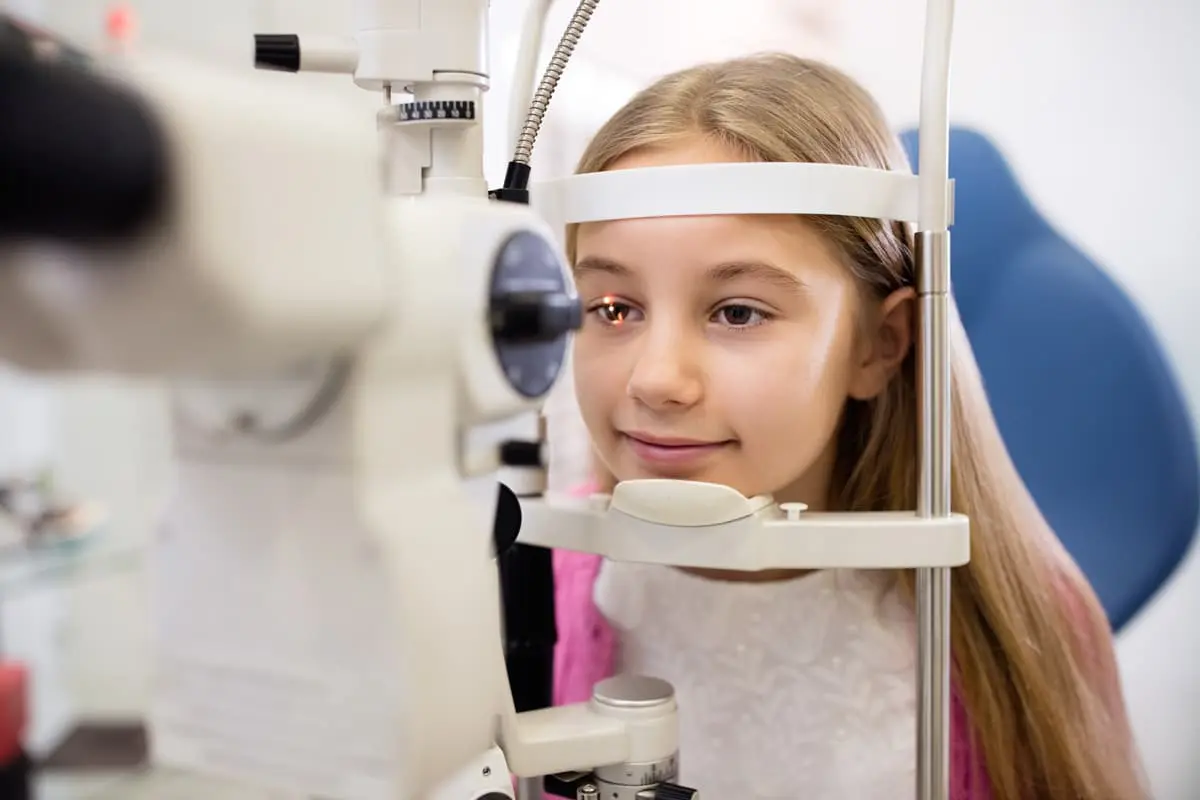
At Eyes by Design in Kincumber, a children’s vision assessment is much more detailed than that.
I am not only checking whether your child can see clearly. I am looking at how the visual system works: how the eyes focus, how they team together, how they track across a page, how stable vision remains under load, and whether visual processing skills may be affecting reading or schoolwork. If your child’s midyear report has raised concerns about focus or reading, this is often the natural next step.
First, We Help Your Child Feel Comfortable
Children can be nervous when they first walk into an optometry room. That is completely normal.
The first thing I do is slow the appointment down and meet the child where they are. I adjust the chair, speak directly to them, ask about their day, and make the room feel less clinical and more conversational.
The assessment is not something I do to the child. It is something I do with them.
That matters. Children give useful clinical information through what they say, how they respond, how they move, how quickly they fatigue, and how confident they feel during the tasks. A child who becomes uncomfortable, avoids a particular activity, or suddenly loses confidence is often telling me something important.
Parents are welcome to stay in the room. In fact, I prefer it. When parents see what I am seeing, the results make much more sense. If both parents can attend, there is less pressure on one parent to remember the important details and communicate them to their partner.
We Start With a Proper Conversation
Before any testing begins, I ask questions.
I want to understand the full picture, not just whether your child can see the board. I may ask about reading, spelling, handwriting, headaches, eye rubbing, concentration, fatigue after school, screen use, confidence, homework behaviour, and what teachers have noticed in the classroom.
I also ask about development. Were milestones reached as expected? Is there any history of middle ear infections or surgery? Do they have good fine or gross motor skills? Have they had their eyes examined before? Were any problems found or treatment prescribed? Is there a family history of lazy eye, strong prescriptions, myopia, dyslexia, ADHD, migraines or binocular vision problems?
This is not box ticking. It helps me decide where to look clinically.
For example, a child who struggles only with close work but does well outdoors or in sport may be experiencing a visual load problem. A child who reads well for five minutes and then falls apart may have a focusing or binocular vision issue. A child who copies poorly from the board may have tracking, focus flexibility, or visual memory challenges.
Children also describe symptoms in their own language. They may say “the words move,” “the page goes blurry,” “I get tired,” “I do not like reading,” “my eyes hurt,” or “I lose my spot.” Even when a child cannot explain the problem perfectly, they often give us clues.

What I Test During a Children’s Vision Assessment
Every child is different, so the exact flow of the appointment may vary. Broadly, I am assessing several key areas.
Visual Acuity: How Clearly Each Eye Sees
We start by checking how clearly each eye sees at distance and near. Depending on your child’s age, I may use letters, numbers, pictures or matching targets. Each eye is tested separately, then both eyes are tested together.
This helps identify whether one eye sees better than the other, whether the child may need a prescription, and whether there are signs of amblyopia, sometimes called lazy eye. A child can function surprisingly well with one eye doing most of the work, which is why testing each eye individually is important.
Children do not need to know their letters to have an accurate eye test. For younger children, I can use picture charts, matching tasks and objective testing. One of the most useful techniques is retinoscopy. This allows me to estimate a child’s prescription by shining a light into the eye and observing the reflex as different lenses are placed in front of it. The child simply looks at a target. They do not need to answer “one or two” or read a line of letters. We also use instrument based measurements where appropriate.
Prescription and Focusing
A prescription is not only about blur.
In children, I am also interested in how hard the focusing system has to work. Some children can make things clear for a short time, but only by using excessive effort. That effort can become tiring, especially during reading, writing and screen based work.
I assess whether the child can focus accurately, shift focus between distance and near, and maintain clear vision during close up tasks. Parents may notice a short attention span, but clinically, the issue may be visual fatigue.

Binocular Vision: How Well the Two Eyes Work Together
Binocular vision is one of the most important parts of a child’s vision assessment.
For comfortable reading, the two eyes need to aim at the same point, focus at the same distance, and maintain a single stable image. This has to happen continuously, not just for a few seconds.
I assess how well the eyes converge for near work, how stable that convergence is, how much effort it requires, and how quickly the system recovers when stressed.
If the eyes are not working well together, a child may experience blur, double vision, headaches, moving print, eye strain, or difficulty concentrating on near work. Binocular vision problems are often missed when an eye test only checks clarity on a chart. This is covered in more depth in binocular vision dysfunction in children.
Eye Tracking: How the Eyes Move Across a Page
Reading requires accurate eye movements. The eyes make a series of small jumps, then pause briefly to take in information. At the end of a line, they need to jump accurately to the beginning of the next line.
If those movements are not accurate, reading becomes inefficient. A child may skip words, miss lines, repeat lines, lose their place, rely heavily on a finger to track, or seem to guess words. I assess both smooth tracking and quick eye jumps.
Depth Perception, Colour Vision and Eye Health
Depth perception tells us how well the two eyes are working together to give the brain a three dimensional view of the world. This is relevant for sport, coordination, stairs and judging distance.
Colour vision is also checked. Colour vision deficiency is more common in boys and can go unnoticed for years. It does not usually stop a child from learning, but it can affect how they interpret colour coded classroom materials.
A children’s vision assessment also includes checking the health of the eyes. I examine the front of the eye, the internal structures, the retina, and the optic nerve to ensure there are no signs that require further investigation or referral.
Visual Processing Skills
Where appropriate, especially when there are concerns about reading, writing, copying, or school performance, I also assess visual processing skills.
These are the skills the brain uses to interpret and organise visual information. Depending on the child’s age and concerns, this may include visual discrimination, visual memory, visual sequential memory, figure ground skills and other processing tasks.
A child may see clearly yet still have difficulty with visual processing.
What Does the Assessment Look Like for Younger Children?
For preschool aged children, the appointment looks more flexible.
A three or four year old is not expected to sit still like a teenager. I adapt the assessment to the child’s age, attention span and confidence level. We may use pictures, matching games, lights, simple targets and objective techniques that do not rely on verbal answers.
The goal at this age is to establish a baseline, detect significant prescriptions, check for eye turns, identify amblyopia risk, and make sure visual development is on track.
What Happens at the End of the Appointment?
The explanation at the end is one of the most important parts of the visit.
I do not want parents leaving with a prescription or recommendation they do not understand. I want them to know what I found, why it matters, and what I recommend next.
I will explain whether your child’s vision is developing normally, whether glasses are needed, whether binocular vision or focusing is part of the picture, and whether any further assessment or treatment is recommended.
When possible, I show parents what I am seeing during the appointment. If a child’s eyes are struggling to converge, I can demonstrate that. If a trial lens improves comfort or fluency, parents can often see the change themselves.

What if My Child Needs Glasses or Vision Therapy?
If your child needs glasses, I explain what the prescription means and when they should be worn. Some children need glasses full time. Some need them for school. Some need them mainly for reading and near work. Some prescriptions are designed primarily to reduce visual strain rather than simply make things sharper.
Vision therapy may be considered when the issue is not fully addressed with glasses alone, particularly for certain binocular vision, focusing or eye movement problems.
Vision therapy is a structured program designed to improve how the eyes and brain work together. It requires commitment and is recommended only when the findings support it. It is not appropriate for every child, and it is not a cure all for learning difficulties.
What if Nothing Significant Is Found?
Sometimes the assessment shows that vision is not the main issue. That is still useful information.
If vision is not contributing significantly, parents can move forward and explore other areas with more confidence. Depending on the child’s symptoms, that may include a speech pathologist, occupational therapist, educational psychologist, GP or paediatrician.
The goal is not to make every concern about vision. The goal is to assess vision properly so it is either addressed or ruled out.
Frequently Asked Questions
How Long Does a Children’s Eye Test Take at Eyes by Design?
A comprehensive children’s vision assessment takes approximately 45 minutes. This includes testing and time at the end to explain the findings to parents.
What Age Should My Child Have Their First Eye Test?
A first comprehensive assessment is generally recommended around three years of age, or sooner if there are concerns. Children do not need to know letters to be tested.
Do I Need a Referral?
No referral is needed. Parents can book directly with Eyes by Design.
Should Both Parents Come?
If both parents can attend, it is helpful, especially when the appointment relates to school, reading or learning concerns. It means both parents hear the findings and recommendations directly.
Will the Test Hurt?
No. A children’s vision assessment is not painful. Most of the appointment involves looking at targets, answering simple questions, following lights or pictures, and doing age appropriate visual tasks.
Ready to Book a Children’s Vision Assessment?
If your child is struggling with reading, focus, headaches, schoolwork or visual comfort, a comprehensive children’s vision assessment is a sensible place to start.
At Eyes by Design in Kincumber, we assess much more than whether your child can see the board. We look at how their vision works for the tasks they need every day: reading, writing, copying, learning, sport and play.
Call Eyes by Design on 4369 8169 or book online through our website.
Dr Nick
Eyes by Design, Kincumber
This article is intended to promote understanding of and knowledge about general eye health topics.
It should not be used as a substitute for professional advice, diagnosis or treatment.
Always seek the advice of your health care professional prior to incorporating this as part of your health regimen.

Dr Nicholas Altuneg
For over two decades, my greatest passion has been helping people of all ages live improved lives through better vision. At Eyes by Design, vision is so much more than being able to see clearly or read small letters from far away; it determines your perceptions and reactions every second of the day.
Read more about Dr Nick


Our Vision Services
Get In Touch
Contact us today


