

You may see comments like “needs to improve focus,” “slow to complete written tasks,” “does not stay on task,” or “not yet working at expected level.” It is natural to wonder whether your child is distracted, not trying hard enough, or dealing with something that has not yet been identified.
In my consulting room, one of the first things I want parents to understand is this: children do not always complain when their vision is not working properly.
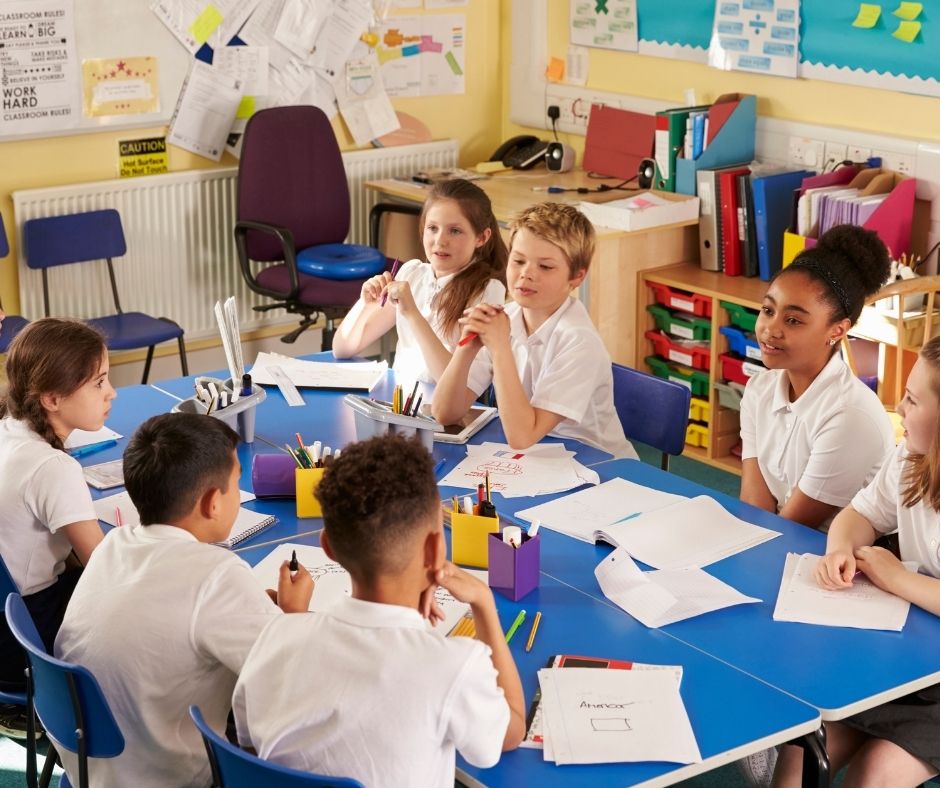
If words blur, move, double, jumble, or become tiring after a few minutes, a child may assume that is normal. They may not have the language to explain what is happening. Instead, parents and teachers see the behaviour that follows: avoidance, fatigue, frustration, poor concentration, messy writing, slow reading, or a child who gives up quickly.
That does not mean every learning difficulty is caused by vision. Glasses do not solve every school problem. But vision is a sensible place to start because it is practical, measurable, and often overlooked.
At Eyes by Design in Kincumber, I assess children from across the Central Coast for much more than whether they can read letters on a chart. A comprehensive children’s vision assessment looks at how clearly a child sees, how well their eyes work together, how accurately they focus and track, and how their brain processes visual information for reading and learning.
Why a Basic Screening Does Not Tell the Whole Story
School vision screenings are useful, but they are not the same as a comprehensive children’s eye test.
A screening may identify a child who cannot see clearly in the distance, which is important. But many classroom tasks are near tasks: reading, writing, copying, using screens, completing worksheets, and shifting focus between the board and the desk.
A child can pass a basic screening and still have difficulty with near focus, eye teaming, tracking across a page, visual processing, or sustained visual comfort. These skills are heavily used in the classroom, but they are not checked in a simple screening.
Reading is not just seeing clearly. The eyes need to aim together, focus accurately, move across text, jump from one word or line to the next, and send stable information to the brain. When one part of that system is inefficient, schoolwork can feel much harder than it should.

The Main Types of Vision Problems That Can Affect Learning
When I assess children, I generally look at three broad areas.
Refractive Errors: Blurry or Uncomfortable Vision
This is the category most parents know about. Refractive errors include shortsightedness, longsightedness and astigmatism. In simple terms, the eye is not focusing light perfectly, so vision may be blurred, strained, or less comfortable.
A child with shortsightedness may struggle to see the board. A child with longsightedness may be able to force things clear for a while, but become tired, distracted, or uncomfortable with close work. Astigmatism can make print look distorted or harder to keep clear.
A prescription does not have to be dramatic to affect a child’s school day. Mild prescriptions can still matter when a child is reading, writing, copying, and concentrating for long periods.
Binocular Vision Problems: When the Eyes Are Not Working Well Together
Binocular vision is the ability of the two eyes to work as a coordinated pair. For reading and close work, the eyes need to turn inward together, hold that position, focus clearly, and maintain a single stable image.
If the two eyes are not teaming well, a child may experience eye strain, headaches, blurred vision, double vision, words moving on the page, or difficulty keeping their place. This is a pattern I explore in more depth in binocular vision dysfunction in children.
One common issue is convergence insufficiency, where the eyes have difficulty turning inward and staying aligned for near work. A child may start reading well, then fatigue after ten minutes. They may rub their eyes, lose their place, re read lines, or avoid homework.
Another issue is accommodative dysfunction, where the focusing system does not adjust or sustain focus efficiently. These children may say the words go blurry, or they may simply stop reading and look distracted.
Eye tracking problems can also affect reading. If eye movements are inaccurate, a child may skip words, miss lines, rely on a finger to track, or read slowly. From the outside, this can look like carelessness or poor concentration. Clinically, it can be a visual efficiency problem.
Visual Information Processing Difficulties
Visual information processing is where the eyes may be seeing clearly, but the brain is having trouble making sense of the visual information.
These skills include:
- Visual discrimination: telling the difference between similar looking letters and shapes
- Word recognition: recognising a word when only part of it is seen
- Figure ground skills: finding important information on a busy worksheet
- Visual memory: remembering what a word looks like for spelling
- Visual sequential memory: remembering letters or words in the correct order
- Visual motor integration: copying accurately from the board or a page
These are not intelligence issues. They are specific visual processing skills that can affect reading, spelling, handwriting and classroom work.
For example, a child with visual discrimination difficulties may confuse b, d, p and q beyond the age where reversals are expected. A child with figure ground difficulties may struggle to find the relevant section on a crowded page. A child with visual memory difficulties may learn a spelling word one day and seem to have lost it the next.
Why Do Children Often Not Complain?
Parents often say to me, “But they never said they could not see.”
That is very common. Children only know their own experience. If print has always been unstable, blurry or tiring, they may assume everyone sees that way.
Instead, children communicate through behaviour. They may avoid reading, resist homework, become emotional quickly, or cope well in the morning but fall apart after school. They may be bright, verbal and capable, but still struggle when the task becomes visually demanding.
A child who can concentrate for Lego, sport, drawing or outdoor play, but cannot sustain attention for reading or writing, is telling us something. It does not prove a vision problem, but it is a clue worth investigating.
Vision, Confidence and School Performance
The confidence side is often what parents find most upsetting.
When a child is working harder than everyone else just to keep the page clear and stable, they start to notice. They may not understand why, but they know reading feels harder for them. Over time, some children start to form a story about themselves: “I’m bad at reading,” “I’m not smart,” or “I hate school.”
That story can become more damaging than the original visual issue.
This is why early assessment matters. If vision is part of the problem, identifying it gives the child and family a clearer explanation. It also gives us a practical plan.

Signs Your Child May Need a Children’s Vision Assessment
Parents may consider booking a comprehensive children’s vision assessment if they notice:
- Discomfort: headaches or eye strain after reading, homework or screen use
- Visual instability: blurry, double or moving words
- Physical habits: rubbing eyes during close work, or holding books or screens very close
- Reading difficulty: losing place, skipping words, re reading lines, or not remembering the same word on the next page
- Avoidance: avoiding books or written work
- Attention differences: short attention span for reading but not for play
- Handwriting and copying issues: messy handwriting or difficulty copying from the board
- Letter reversals: beyond the expected early years
- Emotional signs: fatigue, frustration, tears or shutdown around homework
No single sign proves there is a vision problem. But if several of these sound familiar, an assessment is a logical next step.
What Happens if We Find Something?
Treatment depends on what is found.
For some children, prescription glasses are a starting point an optometrist may consider. These may be for full time wear, school, reading, or specific visual tasks. In some cases, lenses may be prescribed to reduce strain on the focusing system or to help the eyes work together more comfortably.
For some binocular vision problems, a prism may be considered to reduce the effort required for the two eyes to maintain comfortable alignment.
For children with more involved binocular vision or tracking problems, vision therapy may be recommended. Vision therapy is a structured program designed to help the eyes and brain work together more efficiently. It is not simply about strengthening eye muscles. It is about improving coordination, control, stamina and visual processing for the tasks the child needs every day.
In mild cases, we may simply monitor and review. Not every finding requires immediate treatment.
Could It Be Vision, Dyslexia, ADHD or Something Else?
Vision problems, dyslexia, ADHD and other learning difficulties can overlap in how they appear. A child who avoids reading, loses focus, skips words, or struggles with written work may be dealing with one or more issues.
A children’s vision assessment does not diagnose dyslexia or ADHD. It can identify whether the visual system is contributing to the problem.
If a visual issue is identified and addressed, some children become more comfortable and more available to learn. If reading difficulties remain, then other assessments may be appropriate. If no significant visual issue is found, we can help point parents toward the next sensible referral pathway.
Vision is not the whole answer for every child. But it is a good place to start because it is concrete, testable and often missed.

Frequently Asked Questions
Can My Child Pass a School Vision Screening and Still Have a Vision Problem?
Yes. A screening is not the same as a comprehensive eye test. Screenings are useful for detecting some obvious eyesight problems, but they may not assess focusing stamina, eye teaming, tracking or visual processing in detail.
What Age Should My Child Have Their First Eye Test?
A first comprehensive assessment is generally recommended around three years of age, or sooner if there are concerns. Children do not need to know their letters to have their vision assessed.
How Long Does a Children’s Vision Assessment Take?
At Eyes by Design in Kincumber, a comprehensive children’s vision assessment takes approximately 45 minutes. That allows time to assess clarity, eye teaming, focusing, tracking, eye health and relevant visual processing skills.
What Is Behavioural Optometry?
Behavioural optometry looks at how vision functions in real life, not just whether a child can see clearly on a chart. It considers focusing, eye teaming, tracking, visual processing and how the child uses vision for reading and learning.
Can Vision Problems Look Like ADHD?
Yes, in some cases. A child who loses focus, avoids reading or fidgets during near work may be experiencing visual fatigue rather than an attention difficulty. A comprehensive vision assessment can help clarify whether vision is contributing to the picture before other assessments are pursued.
Book a Children’s Vision Assessment These School Holidays
The school holidays are a practical time to book. There is no school day to miss, no rushed homework afterwards, and your child can come in without already being tired from a full classroom day.
If your child’s midyear report has raised concerns about focus, reading, written work or confidence, vision is a sensible place to start.
Call Eyes by Design on 4369 8169 or book online through our website.
Dr Nick
Eyes by Design, Kincumber
This article is intended to promote understanding of and knowledge about general eye health topics.
It should not be used as a substitute for professional advice, diagnosis or treatment.
Always seek the advice of your health care professional prior to incorporating this as part of your health regimen.

Dr Nicholas Altuneg
Since graduating in 1993, my greatest passion has been helping people of all ages live improved lives through better vision. At Eyes by Design, vision is so much more than being able to see clearly or read small letters from far away; it determines your perceptions and reactions every second of the day.
Read more about Dr Nick
What Others Are Reading:


Our Vision Services
Get In Touch
Contact us today


